
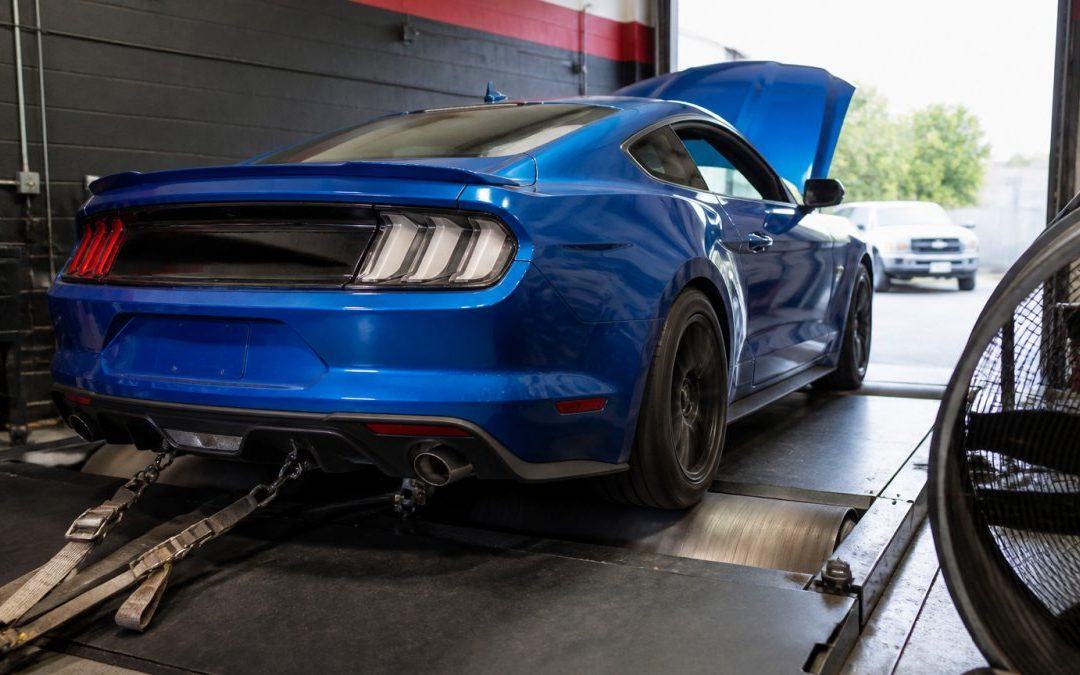
Table of Contents
- How to Find the Right Dyno Near Me
- 2WD vs AWD Dyno Services: Which One Does Your Car Need?
- What Happens During a Dyno Tuning Session
- How to Prepare for Dyno Tuning
- What Affects Dyno Tuning Cost
- Mainline ProHub Dyno Advantages for Your Build
- Dyno vs Street Tuning: Why the Dyno Comes First
- Frequently Asked Questions
Last Updated: October 1, 2026
How to Find the Right Dyno Near Me
Searching for a dyno near me usually means you want a chassis dynamometer, a rolling-road rig that lets a tuner load your engine under controlled conditions and measure what it actually produces. The right shop matters more than the drive time. Motorplex Milwaukee, a family-owned automotive center with more than 30 years of experience, runs Mainline ProHub Dyno services alongside diagnostics and performance work.
- A dyno cell with proper airflow. Forced induction builds need moving air across the intercooler and radiator, not a box fan.
- Technicians who tune, not just operate. Ask who writes the calibration and what platforms they work with.
- Data logging as standard. Every pull should produce a log you can review.
- Straps rated for your drivetrain. AWD cars need four-wheel loading, not two.
Ask for a sample dyno graph before you book. A shop that tunes regularly will have logs and graphs on hand. If they hesitate, that tells you something.
2WD vs AWD Dyno Services: Which One Does Your Car Need?
The answer is simple: match the dyno to your drivetrain. A 2WD dyno loads two wheels and suits rear- or front-drive cars. An AWD dyno loads all four, which is the only way to measure a car that sends power to every corner.
| Dyno Type | Best For | Watch Out For |
|---|---|---|
| 2WD dyno | Rear- or front-drive cars, most drag builds | Cannot load an AWD drivetrain safely |
| AWD dyno | All-wheel-drive cars, street-prepped and rally builds | Needs a skilled operator to sync the rollers |
What Happens During a Dyno Tuning Session
A dyno session runs in stages: strapping down, a baseline pull, tuning changes, then verification pulls. The car is secured to the rollers, a wideband sensor reads air-fuel ratio, and the technician logs data on every run.
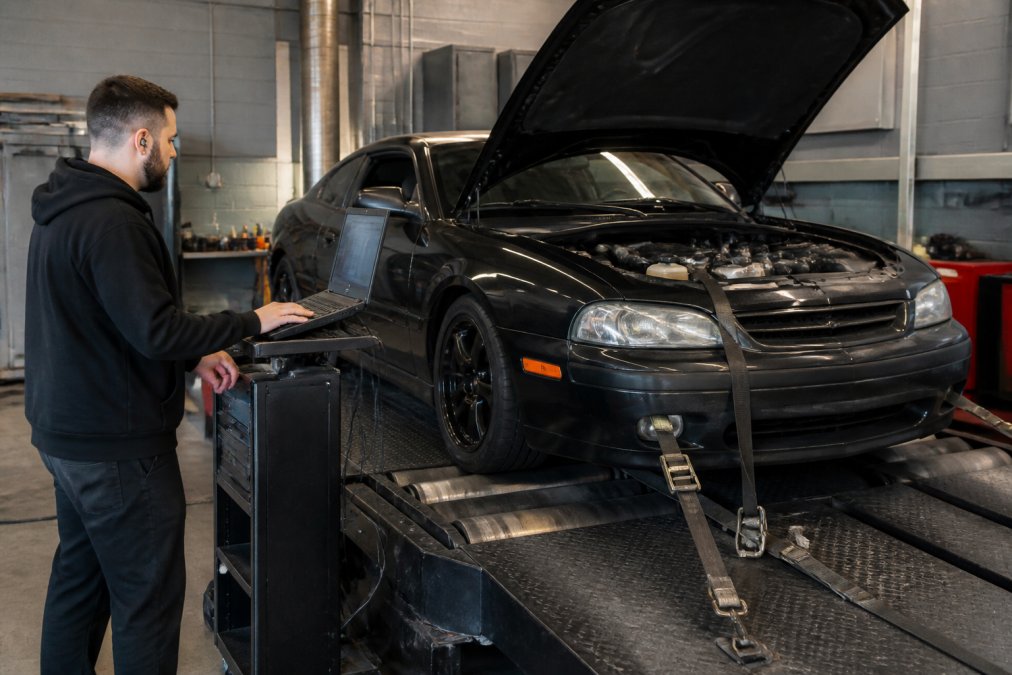
A typical session looks like this:
- Vehicle check. Tire pressures, fluids, and any stored diagnostic codes get reviewed first.
- Baseline pull. The car runs as-is to establish a starting point for horsepower and torque.
- Calibration changes. The tuner adjusts fuel mapping and ignition timing between pulls.
- Verification. Final pulls confirm the changes hold and the engine stays safe.
ECU Tuning and Engine Management Explained
ECU tuning is the process of changing the calibration inside your car’s engine control unit so fuel delivery, ignition timing, and boost targets match your hardware. On an aftermarket ECU, the tuner has full control over the tables. On a factory ECU, they work within the manufacturer’s protection limits.
How to Read Your Dyno Graph
A dyno graph plots horsepower and torque against engine RPM. The torque curve shows how the engine builds load; the peak power number is the highest point on the horsepower line. What matters more than the peak is the shape of the curve.
How to Prepare for Dyno Tuning
Preparation starts before you book. A car that arrives ready gets more usable pulls out of its session, and that saves you money.
- Fresh oil and filter, especially on a new build
- Correct tire pressures, no cords showing
- A full tank of the fuel you actually run
- No active check-engine codes
- Any recent hardware changes disclosed to the tuner
- Keys, wheel lock, and any tuning software license ready
Showing up with a boost leak or a failing fuel pump wastes the session. The tuner chases a problem that is not in the calibration, and you pay for the time.
What Affects Dyno Tuning Cost
Dyno tuning cost depends on how much calibration work your build needs, not just how long the car sits on the rollers. A stock car with a mild intake takes far less time than a built engine with an aftermarket ECU and a cam swap. Because pricing varies that much, the useful move is to understand how shops actually bill, then ask for a quote against your specific setup.
How Shops Structure Dyno Pricing
Most performance shops bill dyno work one of three ways:
- Hourly dyno rate. You pay for time on the rollers plus the tuner’s labor. Baseline-only pulls usually run one to two hours; a full custom tune on a factory ECU commonly runs three to five hours, and a standalone ECU build can run a full day or more.
- Per-pull or baseline package. A flat fee for a set number of wide-open-throttle pulls, typically two to three, with a printed graph. This is the cheapest way to get a number, but it does not include calibration changes.
- Flat-rate custom tune. A quoted price for the whole job, often tiered by platform (bolt-on, forced induction, standalone). This is the most predictable for the customer and the most common for repeatable builds.
The Cost Drivers That Actually Move the Number
- Session type. A baseline power pull costs less than a full custom tune because no calibration changes are made.
- Platform complexity. Standalone engine management takes longer than a factory ECU reflash because the tuner builds tables from scratch rather than editing existing ones.
- Hardware installed. Forced induction, larger injectors, cam changes, and intake/exhaust work all add tuning time, and some combinations require a break-in pull before any tuning begins.
- Number of pulls. More iterations mean more shop time, and a car that fights the tune can double the session length.
- Diagnostics. If the car has a boost leak, a failing fuel pump, or stored codes, sorting that out comes first and is billed as diagnostic time, not tuning time.
- Fuel and consumables. A full-tank requirement, race fuel, or methanol means you supply or pay for the fuel burned during the session.
A cheap hourly rate is not the same as a cheap tune. A shop that finishes in two hours because it skipped data logging or verification pulls has not saved you money, it has left power and safety margin on the table.
What to Ask Before You Commit
Get a written quote that names the session type, the expected number of pulls, whether diagnostics are included, and what happens if the car needs more time than quoted. Ask whether the price includes a printed or emailed dyno graph and the data logs. A shop that tunes regularly will answer all of this without hesitation.
Mainline ProHub Dyno Advantages for Your Build
A Mainline ProHub dyno is a load-bearing chassis dynamometer built for repeatable, controlled testing. The key advantage is eddy current loading: the dyno can hold the car at a steady RPM or apply a fixed load, which is exactly what you need for fuel mapping and ignition timing work.
Dyno vs Street Tuning: Why the Dyno Comes First
Dyno tuning is controlled and repeatable; street tuning is real-world but impossible to replicate. That is why the dyno comes first, but the honest answer is that the two are not competitors. They answer different questions, and the best calibrations use both.
What the Dyno Does That the Street Cannot
On the dyno, ambient conditions are stable, the load is measured, and every pull happens the same way. A tuner can see exactly what a fuel or timing change did because the only variable that moved is the one they changed. The dyno also lets a tuner hold the engine at a steady load cell, something no public road allows, which is how fuel mapping and ignition timing get dialed in cell by cell instead of guessed at.
What the Street Does That the Dyno Cannot
The dyno cannot fully replicate real airflow across the intercooler and radiator, road grade, ambient heat soak, or the transient throttle inputs of daily driving. A calibration that looks perfect on the rollers can still surge at light throttle, hunt at idle in gear, or heat-soak in stop-and-go traffic. That is why a street check after the dyno session is standard practice, not a shortcut.
The Trade-Offs, Side by Side
| Factor | Dyno Tuning | Street Tuning |
|---|---|---|
| Repeatability | High, same load, same conditions | Low, traffic, weather, and grade change every run |
| Safety | Controlled cell, engine protected | Public road, real risk to driver and others |
| Legal exposure | None from the tuning itself | Varies by state and local law; street racing and reckless driving statutes apply |
| Real-world validation | Limited | Strong |
| Cost efficiency | Fewer pulls to reach a result | More time, more fuel, more risk per data point |
Tuning at wide-open throttle on public roads is illegal in many jurisdictions and dangerous everywhere. Most practitioners treat street time as a validation pass at part throttle, not a place to make full pulls. Check your state and local statutes before assuming a road log is acceptable.
The Practical Workflow
Dyno first, then a street check. Get the calibration safe and strong under controlled load, confirm the fuel and timing tables hold, then drive the car normally and log part-throttle behavior to catch drivability issues the dyno missed. Skipping the dyno and tuning purely on the street means guessing at the numbers and accepting risk you do not need to take.
The dyno is where you find the limit safely and repeatably. The street is where you confirm the car is pleasant to live with. A shop that offers only one or the other is offering half a calibration.
Frequently Asked Questions
How much does a dyno session usually cost?
Dyno tuning cost depends on how many pulls you need, whether you’re doing a baseline run or a full custom tune, and how complex your ECU and engine management setup is. A simple baseline pull costs less than a full calibration session with data logging and multiple adjustments. Contact Motorplex Milwaukee directly for current pricing on Mainline ProHub Dyno sessions based on your vehicle and goals.
How should I prepare my car for a dyno tuning session?
Before you arrive, check your fluid levels, tire pressure, and make sure your battery is in good condition. Fill the tank with the fuel you normally run, since fuel mapping is calibrated to what’s in the tank. Fix any known mechanical issues first, like vacuum leaks or a failing sensor, because the dyno can’t tune around a broken part. Bring any tuning device or aftermarket ECU documentation your shop may need.
Is dyno tuning safe for a daily driver?
Yes, when the session is run properly. A chassis dynamometer lets a trained technician apply load in a controlled environment, monitoring air-fuel ratio, ignition timing, and knock the whole time. The risk isn’t the dyno itself; it’s pushing a car past its mechanical limits. A shop that checks your drivetrain and cooling system first will keep a daily driver well within safe parameters while still improving throttle response and drivability.
What is the difference between a hub dyno and a roller dyno?
A roller dyno measures power where the tires meet the drum, so tire slip and strap tension can slightly affect readings. A hub dyno bolts directly to the wheel hubs, removing tire variables and delivering more repeatable horsepower and torque numbers. Hub dynos also tend to be gentler on tires and better suited to high-horsepower or AWD builds where traction on rollers becomes unpredictable.